Safety
Safety and health are inextricably linked.
About Safety
Safety and health are inextricably linked. This link intersects with all other Priority Areas for Collaboration identified through the consultation process and is an essential area for community capacity building work.
Women and gender-diverse people conceptualized safety as:
- Freedom from interpersonal physical, sexual, mental, emotional and financial violence
- Freedom from systemic and structural violence, such as anti-Black, Brown, Asian and Indigenous racism, homelessness, poverty, gender-based discrimination, homophobia, and more
- Essential to promoting health and well-being, preventing HIV, and ensuring women and gender-diverse people have helpful linkages to care
Community based responses included:
- Gathering with a common purpose of sharing and supporting one another
- Having a safe place to sleep and take some respite,
- Spaces to connect with people linked by shared identities, experiences of racism and discrimination, or immigration, violence and/or poverty
- Increased knowledge about the impacts of gender-based violence and strategies to provide support and advocacy in culturally thoughtful and anti-racist ways
- Trauma-informed care, and strategies to support and foster women and gender-diverse people's autonomy and self-determination

What is WHAI doing?
Moving this work forward, WHAI’s community capacity building work includes:
- Raising awareness about women and gender-diverse people's layered realities of violence and how these intersect with HIV risk and health outcomes through a range of community development initiatives, training, and resource sharing
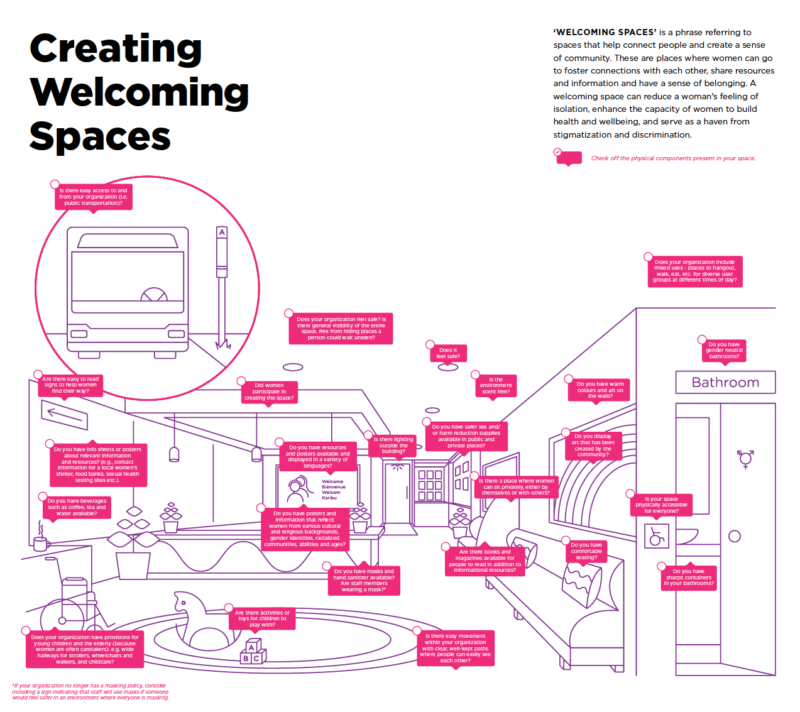
- Collaborating with community organizations and networks to facilitate spaces for people from WHAI’s priority populations to come together and develop community-based responses related to safety, including safety as related to accessing HIV care and prevention
- Creating spaces for learning about systemic and interpersonal violence, including anti-Black and Indigenous racism, and supporting women and gender-diverse people where appropriate, to share their knowledge with community partners
- Providing knowledge translation and capacity building for community partners (centring women and gender-diverse people's voices) to learn skills and strategies for fostering physically, emotionally, spiritually, culturally and mentally safe places and peer-led strategies for women and gender-diverse people to connect and access safe HIV care and support
Community Voices
Our work is always informed by the lived experiences of women and gender-diverse people.

“There are lots of assumptions about what racism is .. and a need for education and discussion about institutional and structural racism and its impact on our work.”

“Wellness is … the ability to sleep at night.I feel well when my mind is at peace, not having traumatic memories of war and death.”