HIV Prevention
HIV prevention is key in reducing new HIV diagnoses. In order for prevention to work, strategies must take into account women and gender-diverse people's life circumstances.
How to prevent HIV
There are currently five main methods of protection against HIV transmission outlined here.
Power imbalances in women and gender-diverse people's lives impact their capacity to prevent HIV transmission. They need accessible and affordable self-controlled methods of prevention that do not require the knowledge or consent of their sexual and/or injection partners. As research advances and new prevention technologies are made more accessible, prevention for women and gender-diverse people is improving.
HIV Prevention Methods: Quick Links

HIV Prevention Medications

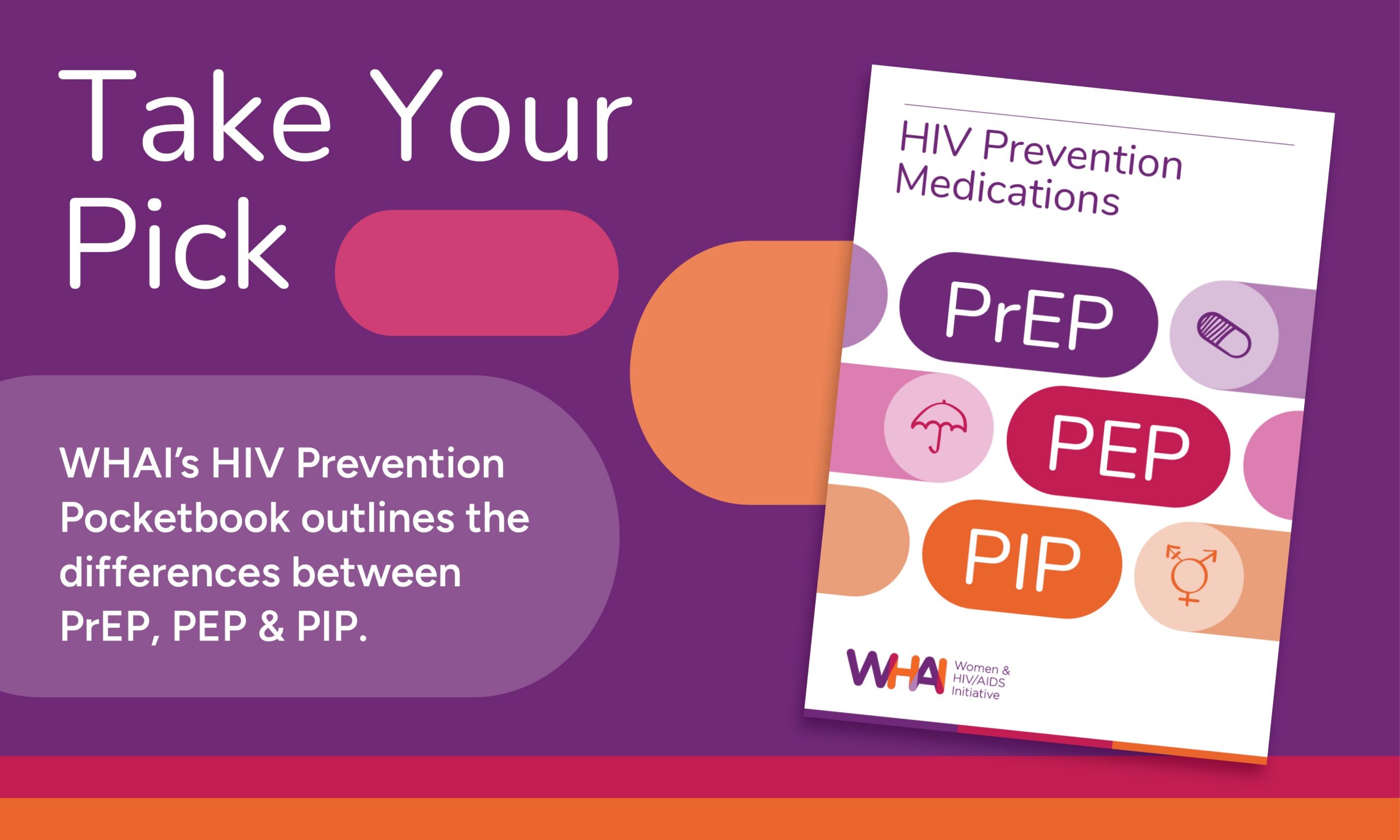
PrEP (Pre-Exposure Prophylaxis) is a prescription HIV prevention medication taken daily BEFORE a potential exposure.

PEP (Post-Exposure Prophylaxis) is a prescription HIV prevention medication that is prescribed and taken AFTER a potential exposure.

PIP (PEP In Pocket) is the same medication as PEP but is prescribed BEFORE a potential exposure and is taken only AFTER there is a potential exposure.
WHAI’s HIV Prevention Material
Learn more about your options by checking out WHAI’s HIV Prevention Medications: PrEP, PEP & PIP Pocketguide.
Pre-Exposure Prophylaxis (PrEP)
Pre-Exposure Prophylaxis (PrEP) is a prescription medication for HIV-negative people to reduce their risk of contracting HIV. PrEP is a combination of two drugs that fight against HIV known as “antiretrovirals” and is typically taken daily. PrEP is safe and has been approved by Health Canada.
Post-Exposure Prophylaxis (PEP)
PEP is a medication that is prescribed after a potential HIV exposure and prevents HIV acquisition. PEP must be taken very soon after exposure, and no more than 72 hours after exposure. The earlier it’s accessed the more effective it can be.
PEP In Pocket (PIP)
PIP (PEP In Pocket) is the same medication as PEP but is prescribed BEFORE a potential exposure and is taken only AFTER there is a potential exposure.
Harm Reduction and Safer Drug Practices
Safer drug use practices have been proven to reduce HIV transmission.

Condoms & Physical Barriers
Condoms are physical barriers that can reduce the risk of a sexual exposure to HIV and sexually transmitted infections (STIs). They are made of materials that do not allow HIV or STIs to pass through them. Condoms are highly effective against HIV and STI transmission when used consistently and correctly.
HIV treatment to reduce the viral load of people living with HIV
Undetectable = Untransmittable*
Community Voices
Our work is always informed by the lived experiences of women and gender-diverse people.

“I was on pre=exposure prophylaxis for a while but was only rarely having sex without a condom. I have an unexpected situation hapen probably only one or two times a year, when a doncom breaks or isn’t used. PIP seemed like a good choice for me because I don’t have to take a daily pill like with the pre-exposure prophylaxis and I can start the medication whenever I need to.”

“We need education for service providers about women and HIV. PrEP, PEP, PIP, U=U, testing. There is a lack of awareness, and it’s so important so women can find out more and so we can all work together.”

“I feel tremendous relief knowing that I can start my HIV prevention medications any time I choose. I once had to go to the hospital for postexposure prophylaxis. I remember having to wait a long time and then having an uncomfortable conversation with a doctor in a rather public setting about my exposure. PIP allows me to bypass the hospital and take ownership over my health.”
Featured Resources From WHAI
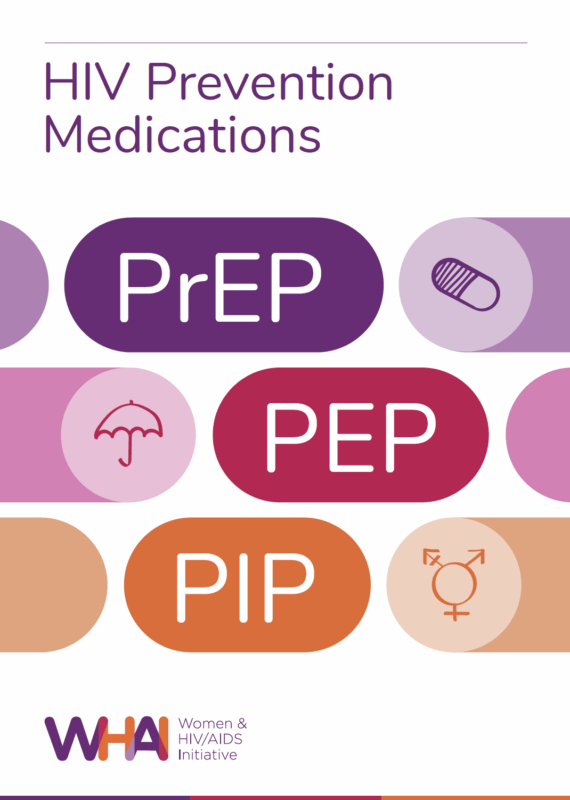
HIV Prevention Medications: PrEP, PEP & PIP
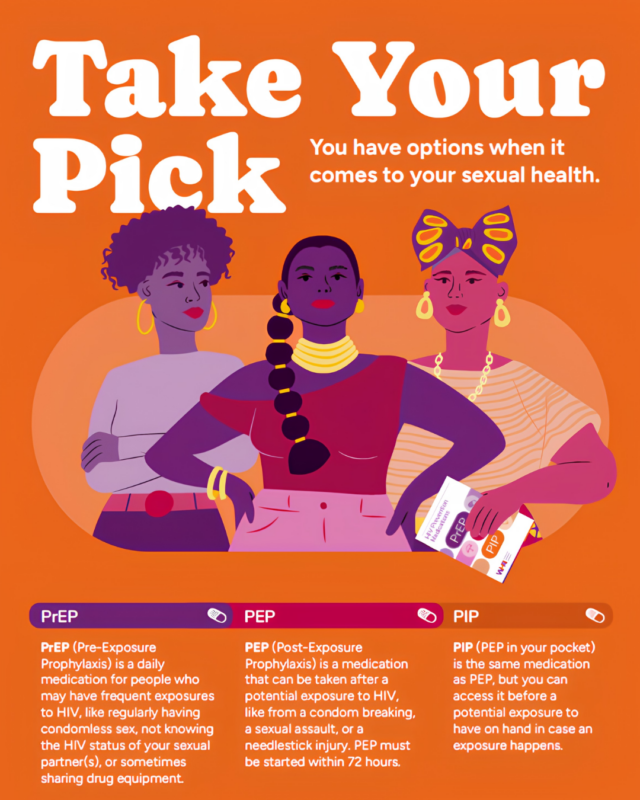
Take Your Pick: HIV Prevention Options Posters

HIV Prevention Medications: Fortune Teller Q&A
Find a WHAI Coordinator Near You
You can connect with a WHAI Coordinator through community organizations across Ontario.